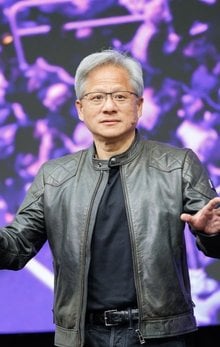
Jensen Huang is ‘Perfectly Fine’ with a Tax on Wealth
A one-time 5% wealth tax led by the SEIU United Healthcare Workers West union is being proposed by California lawmakers to impose larger taxes on the state’s ultra-wealthy.
Several tech leaders in California are planning to relocate operations in Florida, such as Meta CEO Mark Zuckerberg and Google Co-Founders Larry Page and Sergey Brin, in order to take advantage of the southern state’s lower tax rate.
However, not all CEOs have had the same knee-jerk response to the proposed bill.
NVIDIA CEO Jensen Huang says he has no intention of moving the company from California.
“I say to everybody, ‘Move to California, don’t leave.’ It’s the highest taxes in the world, but it’s okay,” Huang said, speaking to US Congressman Ro Khanna at the Stanford Graduate School of Business on 16 April.
Jensen also told Bloomberg on 6 January that NVIDIA operates in California’s Silicon Valley because “that’s where the talent pool is”. Additionally, in response to questions about the wealth tax, he said he wasn’t concerned about it, instead adding that he was solely focused on building “the future of AI.”

Tax impact on the C-Suite
Despite its growing momentum, the proposed tax is yet to qualify for the ballot.
The measure would impose a one-time 5% tax on the assets of billionaires – including stocks, art, businesses, collectibles and intellectual property – to backfill federal funding cuts to health services that were signed by President Trump in 2025.
The tax would apply retroactively to billionaires residents of California as of 1 January.
Jensen states he’s “perfectly fine” with the proposed tax in the interview with Bloomberg and that he was comfortable paying any additional taxes required of NVIDIA.
At a net worth of US$174bn, Jensen is currently the eighth richest person in the world. According to a report by SFGATE, the proposed law would require him to pay an estimated annual sum of US$8bn in taxes.
If paid, Jensen would be left with a remaining net worth of more than US$150bn, an amount that exceeds the GDP of many countries worldwide.
Several others in NVIDIA’s C-Suite, including Jensen, would also be impacted by the proposed tax.
In July, Nvidia’s CFO Colette Kress, Executive Vice President of World Field Operations Jay Puri and other large shareholders saw their wealth increase to more than US$1bn as per calculations by the Bloomberg Billionaire’s Index, following a 35% rise in market share price in 2025.
California’s financial backbone
California has more billionaires than any other state, and nearly half the state’s personal income tax revenue, a financial backbone in its nearly US$350bn budget, comes from the top 1% of earners.
The proposed tax has created rifts within the US Democratic Party.
Leaders like Californian Governor Gavin Newsom suggest the bill could harm the US economy, whereas Vermont Senator Bernie Sanders has long supported a bill of its kind, evidenced by a 2019 post on X: “At a time of massive income and wealth inequality, the richest people in our country must start paying their fair share of taxes.”
The California Business Roundtable – a committee that has received donations from billionaires like Larry Page and Peter Thiel – is leading the effort to combat the tax.
In a company statement, the organisation claimed the tax would “undermine our economy, decimate the state budget, drive investment out of the state and ultimately make everyday life more expensive for working families.”
In contrast, Suzanne Jimenez, Chief of Staff at SEIU United Healthcare Workers West, said the tax is a “workable response to a crisis created by Congress” in a statement, adding that it would “keep emergency rooms open, hospitals staffed and healthcare systems functioning.”
Company portals

Executives
Jensen Huang
Founder and CEO