Microsoft CEO at Davos: The Real World Impact of AI

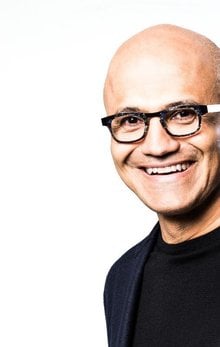
Microsoft CEO Satya Nadella has joined the conversation at the World Economic Forum in Davos, Switzerland to discuss the role of AI in shaping the global economy’s ongoing technological transformation.
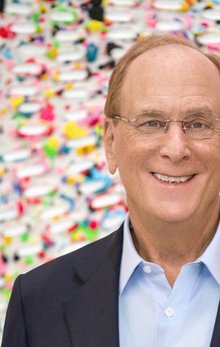
In conversation with Larry Fink, Chair and CEO of BlackRock and Interim Co-Chair of the World Economic Forum, Satya discussed how AI is changing the way we work and has the opportunity to increase productivity if it is used to its full potential.
The topic of the AI bubble remains among tech conversations, but Satya outlined that AI is far too widespread to be a bubble.
“So many people talk about there may be an AI bubble,” he said. “The most important thing that we see as an investor is the democratisation of technology and the diffusion of that technology really does then transform the demand, and the companies or the countries that diffuse it fastest are going to be the ultimate winners, not the technology creator.”
Satya added that a “tell-tale sign” of a bubble would be if “all we’re talking about are tech firms and all we talk about is what’s happening in the technology side”. He explained that AI has now gone, or has the potential to go, far beyond just technology talk.

AI’s potential in other sectors
Satya stressed that the power of AI needs to be focused on improving the outcomes of everything ranging from health to education.
“We as a global community have to get to a point where we are using [AI] to do something useful that changes the outcomes of people and communities and countries and industries,” the CEO said.
The involvement of AI in healthcare is already being seen in the industry, with OpenAI’s announcement on 8 January of OpenAI for Healthcare, indicating a deliberate move into regulated, high-impact industries.
This focuses on tasks like summarising medical records, preparing for appointment, reducing administrative burdens for clinicians and aiding in drug discovery, while emphasising security and compliance.
Education across all levels
During the interview, Larry highlighted that applications for AI “are heavily weighted towards those who are educated or educated economies”. He asked Satya how major portions of society that are currently not involved in the AI conversation can start to see its diffusion.
Satya said that it is likely the lack of use case that makes these areas of the world less inclined to use the software, as “these models and their output are pretty much available everywhere”.
He used the smart phone to explain the diffusion, saying “it took a long time for even the smartphone in particular to penetrate all the world, whereas now it’s not the case”.
“One of the demos I always go back to, I think this was even in the beginning of 23 [2023],” the CEO explained, “was a rural Indian farmer who was able to use a bot built on, I think a very early GPT, essentially to reason over some farm subsidies that he heard about.”
He added: “I do think it’s in our hands even in the global south to use it to create, I would say, more of an opportunity when there isn’t one.”
Limitations to AI use
Despite this, Satya says that there will be limitations to AI use in certain areas of the world as it is highly dependent on capital.
He warned that this potential depends on meeting the “necessary conditions”, mainly attracting capital investment and building supportive infrastructure.
Satya said that even though major tech companies are “investing all over, including the global south”, success requires policies that draw in both public and private capital.
He explained that some essentials like the grid are “fundamentally driven by governments”, while private firms can only operate effectively once basic systems like energy and telecom networks are reliable.
For long-term scalability, he envisioned “token factories”, AI-driven infrastructure, tightly integrated with the grid and telco network, ensuring emerging economies can sustainably deliver both “token plus bits” in the digital future.
Company portals



Executives
Larry Fink
Chairman and Chief Executive Officer
Satya Nadella
Chairman and CEO