
BlackRock & ExxonMobil: Rethinking Enterprise Emissions

A new coalition including BlackRock’s Global Infrastructure Partners, ExxonMobil and Santander has formed with the aim of redesigning how corporate carbon emissions are measured across supply chains, products and financial portfolios.
The group, known as Carbon Measures, seeks to eliminate double-counting and introduce consistent standards for calculating the carbon intensity of traded goods.
Amy Brachio, Chief Executive of Carbon Measures and former Global Vice Chair for Sustainability at EY, leads the initiative alongside organisations such as chemicals group BASF SE, consultancy EY, industrial gas company Linde Plc and Japanese conglomerate Mitsui.
She says the group’s approach reflects the need to embed emissions data into the value of physical products, explaining that “if you are buying a tonne of steel, you need to understand how much carbon went into producing that tonne of steel, so that when it's sold you're not only selling the asset of the steel, but you're selling the liability – so to speak – of the carbon emissions that go along with it.”
Moving beyond the GHG Protocol
The group proposes a departure from the Greenhouse Gas (GHG) Protocol, the current global standard for emissions reporting, developed in the late 1990s and widely adopted across the S&P 500.
Critics including BlackRock and ExxonMobil argue that the GHG Protocol enables different actors in a supply chain to report the same emissions, which they see as a flaw that inflates figures and weakens accountability.
Darren Woods, Chief Executive of ExxonMobil, says: “The first step to reducing global emissions is to know where they're coming from. Today, we don't have an accurate system to do this.”
Carbon Measures aims to address this by building a ledger-based emissions accounting system that traces emissions through the life of a product, similar to traditional financial accounting practices.
Those who support the GHG Protocol push back, describing double-counting as one of the framework’s “greatest strengths” because it promotes “comprehensive” greenhouse gas management.
According to that view, allowing multiple participants to count the same carbon output drives more actors to take responsibility for reductions.
Carbon Measures intends to complete the new framework within two years, with scale expected over a five to seven-year period.
The group has around 20 members and expects to grow to 100, with particular focus on attracting high-carbon industries that will benefit from product-specific emissions tracking.
Aligning with global regulations
The new initiative comes at a time when new regulations are forcing businesses to examine the carbon embedded in their operations and products.
For example, the European Union’s carbon border adjustment mechanism increases pressure on businesses to calculate emissions attached to imported materials.
Carbon Measures aims to support regulators and industry by creating product-level carbon intensity standards for sectors that account for a large share of global emissions, including steel, concrete, chemicals, electricity and fuel.
If you are buying a tonne of steel, you need to understand how much carbon went into producing that tonne of steel, so that when it's sold you're not only selling the asset of the steel, but you're selling the liability – so to speak – of the carbon emissions that go along with it.
These standards would enable firms to track carbon liabilities with precision and allow policymakers to develop clearer rules for emissions disclosure.
Ana Botin, Executive Chair of Santander, says, “Accurate and transparent calculation of carbon emissions is the foundation for meaningful climate action.”
The group also plans to advocate for public policy aligned to its standards and to encourage governments to adopt consistent rules that reflect real emissions at product level.
Francois Jackow, Chief Executive of Air Liquide, adds that standardised data will help investors make better-informed decisions, saying that “harmonised product-level carbon intensity standards will enable investors to reward low-carbon solutions.”
BlackRock’s Global Infrastructure Partners declines to comment on the project directly but states on its website that the energy transition is the “single biggest investment opportunity”. It also describes plans to use its influence with governments and companies to support decarbonisation.

Building industry momentum
The work ahead for Carbon Measures centres on creating emissions data that is clear, comparable and embedded into the value of the goods being traded.
Amy acknowledges the challenge, stating that “precise and comparable data has proven something of a holy grail”. She also argues that the current approach “simply won't be sufficient going forward.”
Whether Carbon Measures can build the scale and consensus needed to replace existing frameworks remains to be seen.
The disagreement between those advocating for product-based tracking and those supporting supply chain-wide accountability continues to divide industry.
For now, the coalition’s aim is to shift carbon reporting toward a system that assigns responsibility based on the product, not the actor, and to do so in a way that aligns with investment, trade and regulatory realities.
Company portals





Executives
Amy Brachio
Chief Executive Officer
Ana Botín
Executive Chair
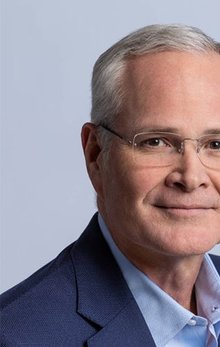
Darren Woods
CEO
Francois Jackow
CEO