Rolls-Royce CEO: Why the Motor Company is Relying on Bespoke

Rolls-Royce Motor Cars is adjusting its strategy as demand for EVs cools - even among its ultra-wealthy clientele.
While the brand’s first EV was initially embraced, that momentum has slowed, prompting the company to lean more heavily into what its richest customers continue to crave: highly personalised, bespoke cars powered by traditional engines.
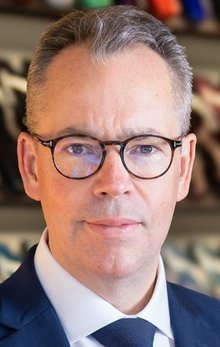
Speaking in an interview with Bloomberg at Rolls-Royce Motor Cars’ Goodwood headquarters, CEO of Rolls-Royce Motor Cars Chris Brownridge made it clear that the company is guided less by ideology than by buyer preference.
The slowdown in EV demand has not prompted a retreat, but it has sharpened the company’s focus on flexibility and craftsmanship.

Delivering Rolls-Royces first
Chris told Bloomberg that electric models remain part of the plan, but not at the expense of what customers actually want to buy.
He said: “We will launch more electric-powered Rolls-Royces, but they’re Rolls-Royces first.
“We see very strong demand for V12 - where the client demand continues for that engine, we will continue to produce Rolls-Royces as well.”
After a strong first full year for the all-electric Spectre, deliveries fell sharply in 2025, even as overall Rolls-Royce vehicle sales continued to edge higher. The two-door coupe now accounts for a much smaller share of the company’s total sales than it did at launch.
Chris suggested this pattern was familiar rather than alarming, saying: “If you look at a concept such as this, it has a very high demand initially and then it stabilises - and remains stable for its life cycle.”
Bespoke takes centre stage
If interest in EVs has plateaued, enthusiasm for bespoke design has not. Rolls-Royce is expanding its Goodwood facility to cope with rising demand for custom commissions, with buyers increasingly opting for brighter colours, elaborate interiors and deeply personal design features.
“This is something we’re seeing such a demand for,” he said in the interview. “We’re looking to put more resources into our private offices.”
Those private offices are located around the world and allow clients to work one-on-one with Rolls-Royce specialists, sometimes over months, to design a single car.
Requests can be highly specific, from unique paint colours inspired by nature to intricate interior finishes crafted largely by hand.
The emphasis on personalisation was reiterated by the President of Rolls-Royce North America Jon Colbeth in an interview with ABC in July 2025. He said: “If somebody is going to buy a new Rolls-Royce, they want to make sure it’s their Rolls-Royce. The only way to do this is to personalise it.”
A very big payday
While Rolls-Royce Motor Cars refines its product mix, a very different Rolls-Royce story is unfolding at the UK-listed engineering group.
Rolls-Royce Holdings CEO Tufan Erginbilgic is in line for a share-based reward that could exceed £100m (US$135m).
Tufan, who took over in early 2023, was awarded 8.3 million shares as part of a recruitment package designed to lure him from private equity.
At the time the award was valued at just over £8m (US$10.8), with the company’s shares trading below £1 (US$1.35) amid concerns over debt, performance and strategy.
Since then, a sweeping restructuring and a rebound in key markets have transformed investor sentiment. Rolls-Royce Holdings’ share price has risen roughly twelvefold, according to The Times, lifting its market capitalisation to about £97m (US$130m).
The potential payout would rank among the largest ever for a UK-listed company and reflects how dramatically fortunes have changed for one of Britain’s most storied industrial names.
Company portals


Executives
Chris Brownridge
Chief Executive Officer at Rolls-Royce Motor Cars
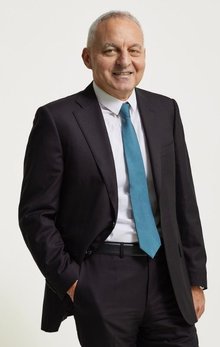
Tufan Erginbilgic
CEO