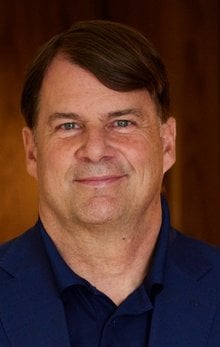
Why CEO Jim Farley Says Tesla Pushed Ford to Evolve

Ford CEO Jim Farley said he was struck by a “shocking” discovery when digging into competitors’ vehicles, encouraging him to take action that would allow the automaker to compete with Tesla and the rapidly evolving Chinese EV market.
Speaking on an episode of the Office Hours: Business Edition podcast, Jim said he was faced with the realisation of how far ahead Elon Musk’s firm and China’s EV upstarts are.
The CEO had previously warned that China’s EV giants pose a threat to Western automakers, describing them in June as “far superior” and “completely dominating” the global EV landscape.
In 2022, Jim created a new division called Model E to help Ford innovate on EVs, but this division lost more than US$5bn in 2024.
Jim said on the podcast, released on 12 November, that he knew diving into EV innovation was going to be “brutal business-wise”.
He added: “My ethos is, take on the hardest problems as fast as you can and do it in public because you’ll solve them quicker that way.”
EV sales have jumped in the US in 2025, but Jim said in Ford’s third-quarter earnings call in October that EVs will only make up 5% of the US car market in the near term.

Jim Farley’s realisation
In the interview with Monica Langley Jim said: “I was very humbled when we took apart the first Model 3 Tesla and started to take apart the Chinese vehicles. When we took them apart, it was shocking what we found.”
Comparing the Tesla model with Ford’s Mustang Mach-E, he said “our wiring loom, just the wiring in the vehicle, was 1.6km longer than the Tesla wiring loom”, adding that the cost of the battery to “haul around the wiring in the car” was US$200.
He added that “when an EV has a really expensive battery, the weight of the vehicle is monetised through the size of the battery”, recognising that investing more in lightweight wiring, which costs more at the outset, will ultimately save money on battery investment.
EVs from China vs the US
Jim highlighted the pace of market growth outside the US, saying that "EVs are exploding in China". He explained that this was in part down to the Chinese government's strong economic support for battery-powered vehicles.
Jim added: "We can’t walk away from EVs, not just for the US, but if we want to be a global company, I’m not going to just cede that to the Chinese."
According to Business Insider, around 50% of new car sales in China are electric, compared to about 10% in the US.
Chinese automakers have rapidly outpaced many Western rivals, offering a range of high-tech EV models. Now, many of these companies are expanding into European markets.
In the UK, for example, BYD saw a staggering 880% year-on-year sales surge, selling over 35,000 vehicles in 2025.
This growth has solidified the UK as BYD’s largest market outside of China. A major factor in this success is the company’s ability to offer high-quality electric vehicles at competitive prices.
The BYD Dolphin, for instance, is a more affordable alternative to models like the Tesla Model 3, attracting a growing customer base.
Much like in Europe, Jim pointed out that in the US, consumers are increasingly interested in affordable electric models rather than high-end options like the “US$70-80,000 electric vehicle".
Automation for the future
Jim also discussed his thoughts on automation, recalling a conversation with his grandfather about the first automated device he ever encountered: the elevator.
"I asked my grandfather, 'what would be the worst job you could think of?'. He said 'an elevator operator. You have no one to talk to, and automation is a scary thing’,” Jim explained.
He went on to say that a large part of Ford's operating ethos is based on "democratising technology”, emphasising that the company’s goal isn’t just to lead with high-end, first-to-market innovations.
Instead, it’s about spreading technological advancements to as many customers as possible.
Company portals



Executives
Elon Musk
Tesla CEO
Jim Farley
Chief Executive Officer