Neom Leaders: Why US$1.5tn Dream is Being Redirected
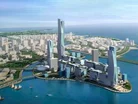
Neom, the US$1.5tn development across Saudi Arabia, is one of the most complex executive visions in modern construction history. The project remains the most ambitious construction vision globally, yet its leadership has made the strategic choice to significantly downscale immediate development plans due to rising costs and timeline reassessments.
The flagship project includes plans for a city named The Line, consisting of a vast stretch of 500-metre skyscrapers in the desert, originally scheduled for completion in 2030. Construction is currently on hold while leaders consider a more realistic timeline, demonstrating how even the most well-funded initiatives require strategic pivots when market conditions shift.
Aligning megaprojects with economic transformation
The birth of Neom is linked to HRH Crown Prince Mohammed bin Salman's Vision 2030, a strategic framework designed to end the Saudi Arabian economy's dependence on oil. Funded primarily by the Public Investment Fund (PIF), Neom serves as the crown jewel of the Kingdom's Giga-projects.
The development is intended to function as a global branding vehicle for New Saudi Arabia – one that is technologically advanced, socially progressive and open to international capital. However, with oil prices fluctuating and the Kingdom managing budget considerations, the 100-mile linear city dream of The Line has been re-evaluated by its executive leadership.
The strategic shift reflects a crucial C-suite principle: preserving core vision while adapting execution. Rather than abandoning the project, leadership has redirected focus towards high-value segments that could offer more immediate economic returns, such as luxury tourism and digital infrastructure.
The recalibration demonstrates the importance of flexible governance structures in megaprojects. By maintaining strategic oversight whilst allowing tactical adjustments, Neom's leadership has positioned the project to weather economic headwinds without compromising its fundamental objectives or losing momentum in key development areas.
Building global partnerships for complex delivery
The scale of Neom has demanded the involvement of leading global engineering and construction companies. Strategic partners include WeBuild from Italy, which is spearheading the US$5bn dam project at Trojena. European firms Vinci SA and ACS, alongside regional heavyweights Nesma & Partners and Al Bawani, are heavily involved in the backbone infrastructure of Neom – the high-speed rail links and underground utility tunnels designed to sit beneath The Line.
China State Construction Engineering Corp (CSCEC) is instrumental in the rapid vertical construction of residential and administrative clusters, using modular construction techniques to meet aggressive deadlines.
For procurement executives, one of the most significant developments is the US$10bn logistics joint venture with DSV, established in December 2023. The partnership (51% NEOM, 49% DSV) is responsible for the end-to-end supply chain management of the entire region, currently developing an innovation centre at Oxagon to pioneer autonomous freight and carbon-neutral last-mile delivery.
The partnership model reflects a broader trend in megaproject delivery, where risk-sharing arrangements between public entities and private sector specialists enable more efficient capital deployment whilst bringing world-class expertise to complex infrastructure challenges.

Positioning for emerging market opportunities
Neom is designed to attract top-tier talent and investment. The retail and hospitality strategy is anchored in ultra-luxury positioning. Sindalah has set the benchmark, with Marriott International signing agreements to bring its elite brands to Neom, including a Ritz-Carlton Reserve at Trojena and W Hotels within the Lake Village.
Recognising shifting global demand, the PIF has unveiled HUMAIN, a venture focused on transforming sections of Neom into a global hub for data centres and AI research.
Development is happening at varying speeds across four main regions. The Line, while originally planned to house 9 million people across 170 km, currently focuses on the first 2.4 km starter segment as a proof-of-concept for high-density, car-free living.
Sindalah, the luxury island destination, is the most mature component, having officially opened to the global yachting community. Trojena construction remains intensive as the site prepares for the 2029 Asian Winter Games. Oxagon, the octagonal industrial port, is becoming a hub for green hydrogen production and automated manufacturing, housing the NEOM Green Hydrogen Company (NGHC), which aims to be the world's largest utility-scale green hydrogen plant.
The strategic recalibration of Neom demonstrates how executive leadership must balance visionary ambition with financial prudence, maintaining stakeholder confidence while adapting to market realities. This approach could provide a blueprint for managing other large-scale transformation initiatives in capital-intensive sectors.



Executives
Tareq Amin
Chief Executive Officer