This Week's Top Five Leadership Stories
NVIDIA CEO says it’s an ‘Incredible Time’ for Software Firms
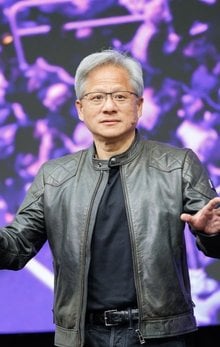
Speaking at a keynote presentation at Computex, a tech show in Taiwan, NVIDIA CEO Jensen Huang said it’s currently an “incredible time” for software companies despite fears that AI could render software coding obsolete – a concern that tech workers often call the ‘SaaS apocalypse’.
“A lot of people have said, 'Jensen, AI is coming. Agentic AI is coming. Therefore, all of the software companies are going to go out of business.' I said it's exactly the opposite,” Jensen said during the speech.
“This is actually an incredible time to be a software company, but the software has to be presented to the agent in a way that the agent can use it,” he added.
While Jensen’s comments come across as optimistic, many in the tech industry worry that AI tools are threatening the traditional business models of SaaS firms, such as companies like Salesforce and Workday.
These industry-wide concerns have resulted in a decline in software stocks, with companies like Atlassian, Salesforce and SAP’s shares falling by more than 20% since the start of the year.
Perplexity CEO says ‘Orchestration’ is Crucial for AI Firms
Perplexity CEO Aravind Srinivas says companies that can provide the most economic value from the power their AI uses will ultimately receive the highest valuations.
He adds that any company that can provide the “most taken value per watt per user” will be the most successful.
“Whoever is able to maximise this particular objective really will, by balancing accuracy, latency, cost, privacy and intelligence all together, they’re going to win long term,” Aravind told CNBC on Wednesday.
When an AI chatbot is asked to carry out a task, it breaks it down into tokens – a basic unit of data that an AI model can process. Each token then requires energy to be processed.
Aravind believes that companies which can provide the best balance of energy to economic output will ultimately be in the strongest position.
Agentic AI Will Reshape Smart Technology, Says Qualcomm CEO
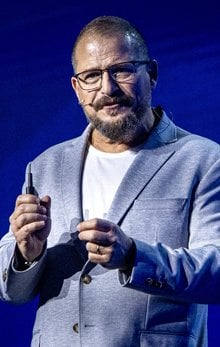
In a keynote speech for the 2026 Computex trade show in Taipei, Qualcomm CEO Cristiano Amon said automated systems that harness AI models to automate complex tasks without human supervision, will fundamentally change humanity’s relationship with technology.
He added that the rise of agentic AI will transform how people interact with phones, PCs, vehicles and wearable devices.
Describing the technology as the next major evolution in computing, Cristiano said that “2026 is the year of agents”.
“The phone, today, is at the centre of your digital life and therefore everything is around the phone,” he said.
Additionally, he claimed that AI could eventually take the place of traditional computer hardware like phones and wearables, which would simply become an extension of the agent.
Mastercard Announces Leadership Reshuffle
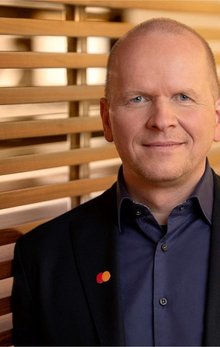
Mastercard has announced a series of leadership changes to its executive team as part of a wider company’s strategy to boost momentum, sharpen business execution and realign its customer focus in support of its continued growth.
These changes have also been implemented to reinforce the strength of its leadership at the C-suite level and also to position itself in a way that brings more value to its customers and partners.
In part with these updates and the brand’s continuous strategic evolution, Mastercard is unifying its customer focus
under one team, emphasising its commitment to consistent support, coordination and accountability across all markets.
These changes will also help reinforce how the company integrates the customer perspective into the development of current and future products and services.
Unilever CEO Dismisses Investor Concerns Over US$66bn Deal
Following the decision to combine Unilever’s food business with McCormick, Unilever CEO Fernando Fernández has dismissed investor anxiety regarding “change fatigue” within the company.
The US$66bn deal between the two companies has seen investors vocalising concerns over the new company’s debt level and further organisational upheaval at Unilever weighing on its stock value.
The deal, which took place in March, saw Unilever’s share price drop 7%, which it is still yet to recover from.
“People say, are you under the risk of change fatigue?” Fernando said at Deutsche Bank conference this week. “I’m not paid to be lazy. Our people are not paid to be lazy.”
At the time of the announcement, Unilever said the combined business would create a food giant worth nearly US$66bn with annual revenues of US$20bn.
This strategic overhaul marks a turning point for Unilever, with Fernando pushing hard for changes in the company’s corporate culture following a period of slow growth under previous CEO Hein Schumacher.
Company portals





Executives

Aravind Srinivas
Cofounder, President, CEO
Cristiano Amon
CEO
Fernando Fernandez
Chief Executive Officer
Jensen Huang
Founder and CEO
Michael Miebach
Chief Executive Officer