
Is UNEP's GEO-7 a Wake-Up Call for Greater Climate Action?

The United Nations Environment Programme (UNEP) has launched its Global Environment Outlook 7 (GEO-7) report, a document highlighting the urgent need for decisive environmental intervention.
The assessment finds the world is facing multiple interconnected crises, including climate change, biodiversity loss, land degradation and pollution. These challenges reinforce one another, pushing planetary systems toward what the report describes as “uncharted territory."
"The excessive and unsustainable use of both finite and renewable natural resources such as fisheries, mineral deposits and fossil fuel reserves puts pressure on environmental systems." GEO-7 states. It warns that "there is a growing likelihood that several tipping points may shortly be irreversibly crossed”.

System-wide failures demand systemic transformation
The report makes it clear that piecemeal responses are insufficient. The causes of climate change and pollution are rooted in fundamental systems of energy production, food cultivation and economic measurement. This misalignment has tangible consequences.
The report highlights that "the number of chemicals released into the environment, including plastics, has grown over time... and new threats arise such as the forever chemicals (poly and perfluorinated chemicals)."
Persisting with these methods could intensify health risks and undermine food and water security.
Inger Andersen, Executive Director of UNEP, offers a stark projection in the report.
“If we choose to stay on the current path...the damages would stack up,” explains Inger.
Inger adds: “Climate change would cut 4% off annual global GDP by 2050, claim many lives and increase forced migration. Amazon forest dieback and ice-sheet collapse would become more likely.”
The economic case for investing in nature
A central message of GEO-7 is that environmental protection and economic prosperity are not mutually exclusive. The report suggests that while sustainability transitions require upfront investment, the long-term financial returns are substantial.
UN Secretary-General António Guterres reinforces this point, stating: “As the Global Environment Outlook 7 reminds us: now is the time for courage and creativity.”
Investing in clean energy ecosystem restoration and sustainable food systems could unlock substantial economic value. The assessment estimates that the global economic benefits of a sustainable development pathway could reach US$20tn per year by 2070.
These gains would stem from improved health outcomes, productivity increases and reduced climate-related damages. This action is needed as global anthropogenic emissions of greenhouse gases (GHGs) reached a record high in 2023.
The report states that 79% of emissions originated from energy, industrial processes, transport and buildings combined, while 22% came from agriculture, forestry and land-use change.
Inclusive and digital pathways to a sustainable future
GEO-7 emphasises that achieving transformative change requires more than just technology and finance. Inclusive governance and social participation are presented as essential components of effective solutions.
"Digital transformation can support the efficient distribution of resources, balance supply and demand and spur the development of innovative city solutions," states the report.
The document outlines concrete solution pathways calling for whole-of-government and whole-of-society approaches to create change in energy, food and materials management. Progress is being made despite the challenging global landscape.
Hilary Allison at UNEP writes that “there has been progress even this year,” although it is not an easy time to press governments for action.
The report ultimately underlines that the next five years will be a crucial period for implementing these systemic changes to secure long-term stability and equity.
Company portals

Executives
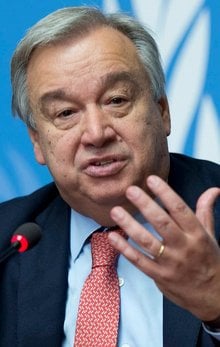
António Guterres
Secretary General
Inger Andersen
UNEP Executive Director & UN Under-Secretary-General