
Why Palantir CEO Alex Karp Thinks AI Will ‘Destroy’ Jobs

Alex Karp, CEO of AI defence organisation Palantir, has revealed at Davos that he believes AI will “destroy humanities jobs”, suggesting that humanities based learning will be “hard to market”.
This is not the first time Palantir has gone against the grain when it comes to traditional hiring practices.
In 2025, the company introduced its ‘Meritocracy Fellowship’ – a paid engineering programme for high school graduates to study philosophy and history and then work on real-world projects.
Palantir describes the fellowship on its website as a way “to cultivate exceptional talent, increasingly overlooked, regardless of background”.
The site continues: “We believe those with the highest aptitude deserve challenges, not a set curriculum; agency, not merely a credential; and responsibility, not busy work.”

Palantir’s approach to skills based hiring
This practical approach to hiring stems from Alex’s own views on the role of university education.
At Davos, he shared that after completing his PhD in philosophy, he struggled to find work – saying that he remembered thinking “I’m not sure who’s going to give me my first job.”
Since founding Palantir, Alex has been outwardly vocal on his cynical views of higher education.
In November 2025 he explained his views on the modern career path in an interview with Axios, saying: “If you are the kind of person that would’ve gone to Yale, classically high IQ, and you have generalised knowledge but it’s not specific, you’re effed”.
“There’s some schools you should maybe go to, otherwise, go to the cheapest school and come to Palantir – or just come here.”
At Davos, Alex explained that today’s workforce requires “different ways of testing aptitude”, adding: “In the past, the way we tested for aptitude would not have fully exposed how irreplaceable that person’s talents are.”
How leaders are adapting to AI integration
While Alex’s verdict that AI will “destroy” jobs may not be widely shared and could oversimplify its implications, many business leaders believe that it is likely to fundamentally change the working world.
Forbes’ 2025 AI survey found that 44% of Chief Human Resources Officers have already transitioned employees into AI-related positions.
Leaders are keen to retain their existing workforce, however.
Of those surveyed, 68% revealed that their organisations have a strategy in place to focus on human-AI collaboration rather than job replacement, with 94% predicting that less than 5% of jobs will be eliminated over 2026 and 2027.
Many leaders also believe that the key determinant of business success in an AI-enabled workforce will be human collaboration.
A 2026 Deloitte survey found that high-performing organisations tend to focus on building human skills – such as divergent thinking and curiosity – to create agile teams capable of implementing new technologies in the most impactful way possible.
In a September 2025 press conference, Doug McMillon, former CEO of Walmart, shared that he believes “AI is going to change literally every job”.
On navigating human-AI collaboration Doug says: “I think the way for us all to approach it, especially here at Walmart, is just in a very transparent, honest, straightforward way, talking to people in real time about what we’re learning and what we’re doing and why we’re doing this.”
Company portals




Executives
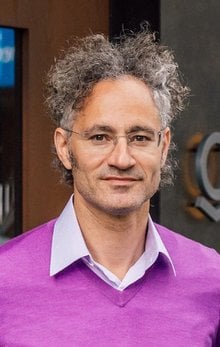
Alex Karp
CEO
Doug McMillon
President & CEO