Top 10: Most Influential CEOs
CEOs wield significant influence, largely driven by the strength of their reputations and their ability to lead both people and financial strategy.
A well-regarded CEO enhances organisational credibility, attracting investors, partners and high-calibre talent. Their leadership style shapes internal culture, guiding employee performance, engagement and alignment with corporate goals.
Equally important is their financial stewardship: CEOs set strategic priorities, manage risk and make capital decisions that determine long-term growth.
When reputation, employee leadership and financial acumen align, the CEO becomes a central force in driving organisational success and sustaining competitive advantage. Here are 10 leaders bringing this essential difference to their organisations.
10. Jane Fraser
Company: Citigroup
Employees: 227,000
Revenue: US$81.14bn
Jane Fraser is Chair of the Board and CEO of Citigroup, having assumed the CEO role in March 2021, when she became the first woman to lead a major US bank.
She joined Citigroup in 2004, holding leadership roles across its consumer and institutional businesses.
Jane has driven a multiyear transformation to simplify Citigroup’s complex structure, improve risk management and focus on profitable businesses.
She champions digital innovation, AI adoption and hybrid workplace flexibility while navigating regulatory challenges and market complexities.
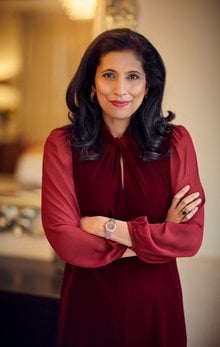
9. Leena Nair
Company: Chanel
Employees: 38,000
Revenue: US$18.7bn
Leena Nair, Global CEO of Chanel since January 2022, leads with a human-centred, progressive style focused on long-term business impact.
She has driven Chanel’s brand excellence, enhanced client experience and accelerated sustainability efforts, including ambitious net-zero targets.
Under her leadership, Chanel increased funding to Fondation CHANEL, supporting millions of women and girls worldwide.
She champions creativity, craftsmanship, diversity and inclusion, positioning Chanel for a sustainable and innovative future while respecting its heritage.
8. Jamie Dimon
Company: JPMorgan Chase
Employees: 317,000
Revenue: US$278.9bn
Jamie Dimon has been Chairman and CEO of JPMorgan Chase since 2006. He joined during the Bank One merger and was CEO of Bank One before that.
Jamie leads one of the world’s largest financial firms with an emphasis on strong risk management, customer focus and building a resilient organisational culture.
Under his leadership, JPMorgan Chase has grown significantly, navigating economic and market challenges while investing in innovation and social responsibility.
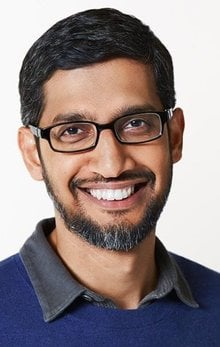
7. Sundar Pichai
Company: Google
Employees: 183,000
Revenue: US$350.02bn
Sundar Pichai has been CEO of Google since 2015 and Alphabet since 2019. He joined Google in 2004, initially leading product teams for Google Toolbar and Chrome.
Sundar oversaw Android, Chrome OS, Search and Maps. His leadership focuses on organising the world’s information, making it accessible and advancing AI and technology globally.
He prioritises innovation, building great products and scaling AI integration across Google’s services and cloud with the goal of helping people everywhere.
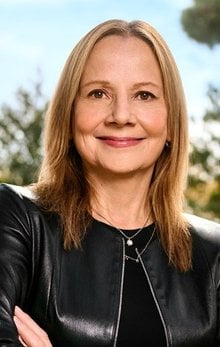
6. Mary Barra
Company: General Motors
Employees: 103,000
Revenue: US$187.4bn
Mary Barra has been the Chair and Chief Executive Officer of General Motors since 2014, making history as the first female CEO of a major global automaker.
She has transformed GM by focusing on customer safety, quality and innovation, particularly in electric and autonomous vehicles.
Mary leads GM’s commitment to a zero-emissions future, aiming for an all-electric lineup by 2035.
She emphasises inclusivity, diversity and transparency, steering GM towards sustainability and technological leadership in the automotive industry.
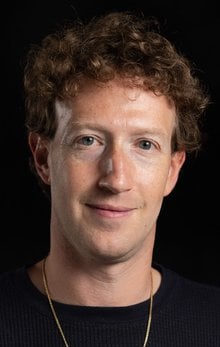
5. Mark Zuckerberg
Company: Meta
Employees: 78,000
Revenue: US$165.4bn
Mark Zuckerberg is the founder, chairman and CEO of Meta (formerly Facebook), which he launched in 2004 while at Harvard University.
He set the strategic direction to build platforms including Facebook, Instagram, WhatsApp and emerging metaverse technologies.
Mark is focused on connecting people worldwide, advancing virtual reality and developing new social experiences through Meta’s products.
His leadership drives innovation in AI, virtual worlds and social networking, aiming to build a more immersive and socially connected digital future.
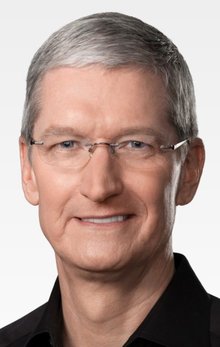
4. Tim Cook
Company: Apple
Employees: 164,000
Revenue: US$391bn
Tim Cook has been Apple's CEO since August 2011, succeeding Steve Jobs. He joined Apple in 1998 as Senior Vice President for Worldwide Operations and was responsible for streamlining the company's supply chain and operations.
Tim has played a key role in Apple's growth, including major product launches like the Apple Watch, AirPods and iPhone models.
Under his leadership, Apple became the first trillion-dollar company and continues to innovate in hardware, software and services while emphasising privacy and sustainability.
3. Andy Jassy
Company: Amazon
Employees: 1,550,000
Revenue: US$638bn
Andy Jassy has been Amazon’s CEO since July 2021, after joining the company in 1997. He founded and led Amazon Web Services (AWS), transforming cloud computing since its 2006 launch.
Andy focuses on innovation, customer obsession and advancing AI technology.
With Amazon investing over US$75bn in 2025, he prioritises AI-driven improvements in shopping, automation and logistics.
His leadership embodies agility, invention and a deep commitment to enhancing customer experiences through technology.
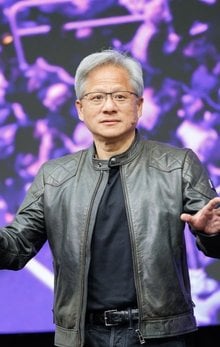
2. Jensen Huang
Company: NVIDIA
Employees: 36,000
Revenue: US$60.92bn
Jensen Huang founded NVIDIA in 1993 and has led it since. Under his visionary leadership, the company pioneered the GPU, revolutionising gaming, graphics and, more recently, AI and accelerated computing.
Jensen steered NVIDIA through early challenges, evolving it into a tech giant at the forefront of AI hardware, data centres, autonomous vehicles and virtual worlds.
His strategic foresight and engineering expertise have driven NVIDIA’s growth to a trillion-dollar valuation.
Jensen’s leadership emphasises innovation, resilience and ethical AI use, positioning the business as a foundational enabler of the AI transformation.
His commitment to pushing technological frontiers while fostering a strong corporate culture defines his enduring influence in tech.
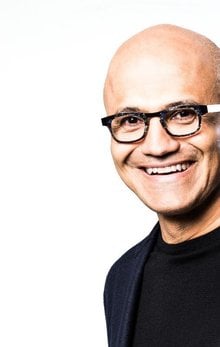
1. Satya Nadella
Company: Microsoft
Employees: 228,000
Revenue: US$281.7bn
Satya Nadella, Microsoft’s CEO since 2014, transformed the company through empathetic leadership and a growth mindset culture.
He shifted Microsoft’s focus toward cloud computing, AI and platform innovation while prioritising inclusion and collaboration.
Satya champions the mission to empower every person and organisation globally, fostering sustainability and ethical AI development.
Under his guidance, Microsoft surpassed a US$3tn market value and grew its Azure cloud to be a global leader.
He promotes a “One Microsoft” philosophy, enabling cross-team innovation and delivering cutting-edge technology solutions.
Satya also emphasises digital transformation, responsible technology, and empowering communities through accessible tech. His leadership style blends vision with empathy, driving both innovation and cultural evolution within Microsoft.
Company portals










Executives
Andy Jassy
President and CEO
Jane Fraser DBE
Chief Executive Officer
Jensen Huang
Founder and CEO
Leena Nair
CEO
Mark Zuckerberg
CEO
Mary Barra
CEO
Satya Nadella
Chairman and CEO
Sundar Pichai
CEO
Tim Cook
Executive Chairman