16 US CEOs Join President Trump for Strategic China Trip
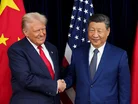
The US government has announced that a list of 16 American CEOs will join President Trump on his trip to China on 13 May.
The list of CEOs includes big names in business and the tech industry, such as outgoing Apple CEO Tim Cook, SpaceX CEO Elon Musk, Blackrock CEO Larry Fink and several top executives from Meta, JPMorgan, Boeing and more.
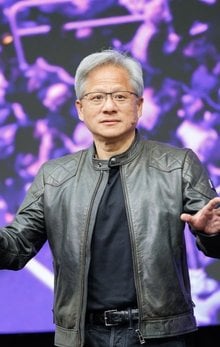
Notably absent from the list is NVIDIA CEO Jensen Huang, who according to a NVIDIA spokesperson said on 11 May that the executive was not invited, despite China’s recent interest in the company’s AI and chip-making business.
The visit is expected to last until 15 May and will serve as a strategic meeting between the world’s two largest economies, with both countries expected to address the growing economic and technological animosity between one another.

Strengthening trade relations
The trip, while a significant step toward effective trade between the two nations, still represents a smaller contingent compared to President Trump’s previous business-focused visits abroad.
In May 2025, President Trump travelled to the Middle East with around 60 CEOs as part of a dealmaking process in countries like Saudi Arabia, Qatar and the United Arab Emirates.
The current list of executives is also less than President Trump’s visit to Beijing in 2017, where he was accompanied by 29 CEOs.
For the trip on 13 May, the US government has suggested major new deals and investments are unlikely to yield radical gains.
A senior US official told reporters on 10 May that “there’s not a proposal out there for some massive investment” from China to the US, saying it “has not been on the negotiating table.”
The official also issued the full list of executives joining President Trump on the trip:
- Apple CEO Tim Cook
- BlackRock CEO Larry Fink
- Blackstone CEO Stephen Schwarzman
- Boeing CEO and President Kelly Ortberg
- Cargill CEO and Chairman Brian Sikes
- Citi CEO Jane Fraser
- Coherent CEO Jim Anderson
- GE Aerospace CEO Larry Culp
- Goldman Sachs David Solomon CEO
- Illumina CEO Jacob Thaysen
- Mastercard CEO Michael Miebach
- Meta President and Vice Chairman Dina Powell McCormick
- Micron CEO Sanjay Mehrotra
- Qualcomm CEO and President Cristiano Amon
- Tesla CEO Elon Musk
- Visa CEO Ryan McInerney
China’s economic resilience
The planned visit will mark the first time a US president has visited China in nearly a decade in addition to the first significant attempt at business between the two countries, following a period of trade standoffs and increasing tariffs which at times topped 100%.
The tariffs were paused in October 2025 following President Trump’s previous meeting with Chinese President Xi in South Korea.
Discussions of the US and Israel’s war in Iran is expected to play a key part in broader talks on trade, which has already delayed the meeting between the two countries.
According to political sources in the US, President Trump is expected to urge China to help facilitate an agreement between Tehran and Washington to end the war.
China also has an interest in ending the conflict, as it has a finite supply of oil which greatly impacts potential trade with other nations.
However, China’s vast oil reserves and diverse energy supply have placed it in a more advantageous position than its global competitors amid fallout from the war.
Discussing China’s economic strength compared to the US’s, Victor Shih, director of the 21st Century China Center at the University of California San Diego, says: “If Germany, France, Japan and [South] Korea were to lose industrial capacities, that will make a supply chain that’s free of Chinese components that much more difficult to achieve.
“We are on the road toward that, and that may well be the reality in the world in the next 10 years [and the US] may need to make even more concessions as China’s dominance over various supply chains increases over time.”




Executives
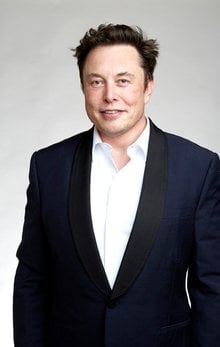
Elon Musk
Tesla CEO
Jensen Huang
Founder and CEO
Larry Fink
Chairman and Chief Executive Officer
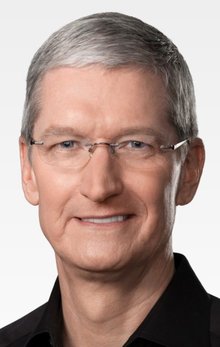
Tim Cook
Executive Chairman