
Elon Musk: The Era of Optional Working
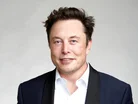
Tech visionary and Tesla CEO Elon Musk is looking ahead to a radical shift he believes is already on the horizon. Drawing parallels to science fiction, Elon says a time is coming when work will no longer be essential, and perhaps even obsolete, thanks to rapid advances in AI and robotics.
The Tesla and SpaceX leader, who recently signed a pay package for US$1tn, shared in a conversation with investor Nikhil Kamath that we may soon enter “a world of abundance where if you can think it, you can have it".
“In a future where anyone can have anything, you no longer need money as a database for labour allocation,” Elon explains. “If AI and robotics are big enough to satisfy all human needs, then the relevance of money declines rapidly, I’m not sure we will have it.”
Work as a hobby, not a necessity
Elon doesn’t see this transformation as a distant dream. In his view, it could unfold within the next two decades. When that happens, he believes society will redefine the very idea of work, seeing it not as an obligation but a pastime.
His argument centres on an economy supercharged by AI and robotics, capable of producing extraordinary volumes of goods and services. This scenario, he suggests, could lift everyone into what he calls a Universal High Income Society, where productivity gains are shared universally rather than concentrated.
The dawn of Transformative AI
A growing body of economic research supports the idea that AI may drive profound productivity shifts. The National Bureau of Economic Research describes Transformative AI (TAI) as “AI that enables a sustained increase in total factor productivity growth of at least 3–5x of historical averages".
Anthropic CEO Dario Amodei envisions such systems as “a country of geniuses in a data centre", capturing the scale of intelligence TAI could represent.
Elon has long argued that once humanoid robots become widespread, global output will surge, ushering in the “world of abundance” he describes. With AI that surpasses human intelligence, machines could connect insights across disciplines in ways that individual human specialists cannot, accelerating innovation beyond historical precedent.
When machines meet abundance
There is, however, debate about who will truly benefit from such progress. Economists warn that returns from automation might flow disproportionately to those who control capital rather than the workforce, unless technology is deliberately designed to enhance human labour rather than replace it.
Elon dismisses concerns about wealth accumulation in such a future. “If you are stranded on a desert island with a trillion dollars, it will be pointless because there is no labour to allocate,” he says, a reminder that in a post-scarcity world, value itself must be redefined.
Energy over money
Elon believes that as money loses its use, energy will become the true standard of value. “Energy will be the true currency,” he predicts.
He imagines a self-sufficient industrial ecosystem in which AI and robots manufacture chips, build solar panels, and mine raw materials to sustain themselves. “Once that cycle is complete,” Elon claims, “we decouple from the monetary system.”
But that independence could spark new existential questions. Elon suggests it might lead to uncertainty about human purpose: “If AI can do things better than you, what is the point of doing things?”

Challenges on the road to plenty
While the future the CEO describes is dazzling, it’s far from guaranteed. Technical constraints like energy availability and infrastructure could slow development, while the IMF warns that uneven AI adoption could deepen divides between developed and emerging economies.
Dario voices similar concerns in his essay Machines of Loving Grace: “Ideally, powerful AI should help the developing world catch up to the developed world, even as it revolutionises the latter.
“I am not as confident that AI can address inequality and economic growth as I am that it can invent fundamental technologies, because technology has such obvious high returns to intelligence, whereas the economy involves a lot of constraints from humans, as well as a large dose of intrinsic complexity.“
Broader questions around AI safety and alignment also weigh heavily. Even Elon’s optimism is tempered by caution, he compares AI to a “blackhole, where we cannot see past the event horizon".
The line between utopia and uncertainty, as Elon sees it, may be thinner than we think.


Executives

Dario Amodei
CEO and Co-Founder
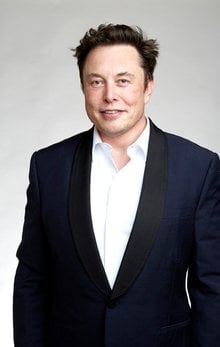
Elon Musk
Tesla CEO