
Volkswagen, Palo Alto and Meta: This Week's Top Five Stories

Volkswagen Considers 100,000 job cuts and Plant Closures
Volkswagen faces a proposal to eliminate 100,000 positions and shutter four German production sites in what would mark the most extensive reduction in the carmaker's 89-year operating history. According to Manager Magazin, the cuts would remove roughly 15% of a 657,400-strong workforce and double the 50,000 reductions already agreed for Germany by 2030.
The company faces pressure from Chinese competitors, US import tariffs and weakening demand across Europe. Presenting first-quarter results earlier this year, in which net profit fell 28% to €1.56bn (US$1.78bn), Chief Financial Officer Arno Antlitz addressed the situation directly.
"The cost savings planned so far are not enough," Arno says. "If we fail to do this, we are putting our future at risk."
Ford Changes Hiring Strategy After AI Fails to Deliver
Following an unsuccessful AI push within the company’s production process, Ford says it has rehired several human engineers to replace its AI manufacturing processes.
The company says it initially sought to use the technology to reduce costs and increase productivity, with Ford adopting it across several parts of its operations, including areas like quality control.
Ford says in recent years it has rehired around 300 veteran engineers to address the pitfalls of its AI systems.
Discussing the shift in Ford’s hiring focus, Charles Poon, Vice President of Vehicle Hardware Engineering, says: “AI is a fantastic tool, but it's only as good as the information you use to train it.”
He adds that the company “didn’t pay as much attention” as it should have to the experience of its “most knowledgeable engineers” that have been with the company through multiple product cycles.
Ford is one of many companies looking to leverage the technology to improve business operations, with many in the global market looking to use AI to potentially grow profit margins.
Palo Alto CEO: 90% of Enterprise Employees Aren’t AI Savvy
Nikesh Arora, CEO of Palo Alto Networks, says modern enterprise workforces aren’t equipped with the skills necessary to navigate the AI revolution.
Speaking on an episode of the 20VC podcast, Nikesh said that 90% of enterprise employees “are not AI savvy”.
He said that the issue surrounding the disconnect between the technology and employee skills was down to the lack of training courses available.
Nikesh added that his 21,000-employee workforce is responsible for their own development, adding that he believes industries are having a “Darwinian moment” where companies have to “figure out who's really good”.
Discussing other enterprises, he added that many firms are opting for mass layoffs as opposed to addressing the AI skills gap, directly addressing major companies like SoftBank, Coinbase and Block, who have previously cited AI as a reason for job cuts.
Meta Announces Cloud Business to Sell Excess AI Compute
Meta has announced plans for a new cloud infrastructure business, designed to offer outside customers access to AI models and computing capacity.
These plans would see Meta compete with the likes of other tech company services like Amazon Web Services, Microsoft Azure and Google Cloud.
An internal group, named Meta Compute, will be instrumental in these efforts. The segment was designed to oversee the buildout and operations of Meta’s AI infrastructure.
Meta Compute is run by several company executives, including Santosh Janardhan, Meta’s Head of Infrastructure; Daniel Goss, an executive within Meta’s Superintelligence Labs AI Unit; and Meta President Dina Powell McCormick.
One of the options under consideration for the computing segment is a service model that would allow outside developers to pay to run queries against AI models – including Meta’s own Muse Spark – on infrastructure that the company owns and operates.
Additionally the company would create a separate avenue to rent out raw GPU capacity directly to Meta customers.
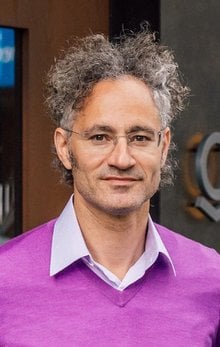
Palantir CEO Alex Karp Calls Firms ‘Insane’ for AI Token Use
Palantir CEO Alex Karp says AI companies like Anthropic and OpenAI who use the AI token model are “insane,” as costs for both firms continue to rise.
“I’m not throwing shade at them, but something has gone completely wrong,” Alex said in an interview on CNBC, adding that US enterprises are being unproductive and are simply wasting time with the token model.
As AI the cost of AI continues to rise on an industrial scale – and new models are proving pricier than their predecessors – companies are moving on from the trend of “tokenmaxxing” and toward a clearer goal of return on their investments.
Tokenmaxxing refers to the act of employers incentivising employees to use as much AI as possible without considering the consumption impact, a move that can prove financially risky.
As strategies like these become more commonplace and as AI becomes less of a novelty technology, more companies are opting for more open-weight models to perform similar AI tasks at considerably lower costs.
Company portals





Executives
Alex Karp
CEO

Charles Poon
Vice President of Vehicle Hardware Engineering

Mark Zuckerberg
CEO

Nikesh Arora
Chairman CEO

Oliver Blume
CEO