How do CEO Factories Produce the Likes of Sundar Pichai?

If the modern film industry tells us anything, it’s that people love an origin story.
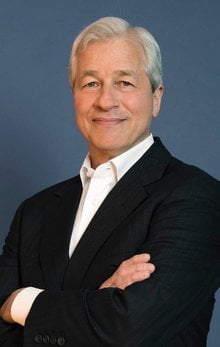
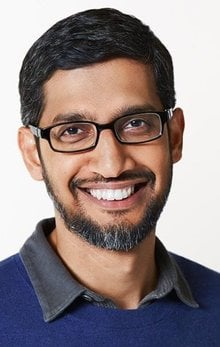
Which brings us to an important question: what do the likes of Sundar Pichai, Sheryl Sandberg and Jamie Dimon have in common? And yes, we know they’re CEOs of some of the world’s largest companies.
But, before being renowned for spearheading innovation, transformation or new ways of working and – more generally – steering the ship at globally known brands, all three have a shared starting point: the CEO factory.
Less a mystical production line churning out board-ready leaders and more a culturally rich organisation dedicated to talent, development and best practice, the CEO factory is a term for organisations known for producing a disproportionate number of future chief executives.
Typically, factories fall into two distinct camps consisting of industry leading corporations like General Electric, Procter & Gamble and others, and top consulting names like Boston Consulting Group, Bain & Company and McKinsey.
And while corporate names have dominated the CEO factory landscape for decades – General Electric being widely regarded as the pre-eminent CEO factory – the picture has shifted in recent times.
Consulting firms are now leading the way, with McKinsey often cited as the leading factory – more than 50% of former senior partners at the firm, including both Pichai and Sandberg, go on to become CEOs elsewhere.

What makes a good factory?
A good CEO factory industrialises leadership development with the same discipline typically applied to product and profit.
This approach, combined with a focus on building pipelines, rotations and cultures reliably – and relentlessly – turns high potentials into enterprise leaders.
The first great academy was General Electric, which soared under the leadership of the Chairman and CEO Jack Welch.

Welch viewed developing talent as a critical responsibility, often touting the importance of nurturing teams and continuous development. During his time at GE, his management focus was on people and succession planning – two core themes that contributed to the company’s CEO factory moniker.
Discussing this, he said: My main job was developing talent. I was a gardener providing water and other nourishment to our top 750 people. Of course, I had to pull out some weeds, too.”
Its Crotonville campus, described by the business as a place to “inspire, connect and develop the leaders of today and tomorrow, and not just internally”, minted a generation of chiefs who went on to run global names.
This includes leaders like James McNerney at 3M and Boeing, David Cote at Honeywell, Robert Nardelli at The Home Depot and Chrysler.
Consumer goods followed suit. Procter & Gamble’s brand-led schooling has produced operators comfortable with scale and scrutiny, from Paul Polman at Unilever to Meg Whitman at eBay and HP.
Unilever and its Indian arm, Hindustan Unilever, have taken the mantle, becoming modern examples, mixing rigorous apprenticeship with global mobility. Alumni include Tesco’s reformer Dave Lewis and Chanel’s chief executive Leena Nair.
The rise of the consulting firms
A second camp has also emerged, forging leaders in crucibles rather than classrooms.
In particular this includes major consulting firms like McKinsey, Bain and Boston Consulting Group honed judgement under pressure and exported it to the operating world.
Alumni from this sector include big hitter names like Sundar Pichai, Vittorio Colao at Vodafone, John Donahoe at eBay and Nike.
What unites the factories is design. They put future CEOs on the hook early for P&L and ensure they rotate talent across functions and geographies before habits calcify.
They also codify a small set of behaviours — how decisions are made, how people are developed — and promote those behaviours as much as results.
Teaching is not outsourced; senior leaders teach the playbook and sponsor the next bench. Boards treat succession as a standing agenda, not an annual ritual.








Executives
Jamie Dimon
Chairman of the Board
Paul Polman
Co Author
Sundar Pichai
CEO