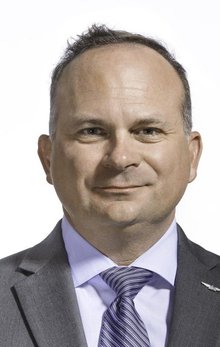
Why is Delta CEO Ed Bastian Cutting Plans for Growth?

Delta Air Lines CEO Ed Bastian has announced company plans to “meaningfully” reduce capacity growth for the current quarter, citing the sudden rise in fuel costs brought on by the conflict in the Middle East.
The airline has stated it plans to remove all planned growth from the current quarter, cutting supply by 3.5%, noting the outlook for growth has a “downward bias” until fuel prices improve.
It added that the conflict has resulted in a US$2bn increase in fuel costs for this quarter.
On 8 April, the company forecast adjusted per-share earnings of US$1 to US$1.50 in the second quarter, compared with the US$1.41 a share analysts were expecting.
In a company statement on Q1’s financial results, Joe Esposito, Chief Commercial Officer, said: “Total revenue of US$14.2 billion was a March quarter record and nearly 10% higher than last year, growing several points above our initial outlook, on broad demand strength across corporate and leisure.
“With continued strength in demand, combined with our actions on capacity reductions and fuel recapture, we expect total revenue growth in the June quarter to be up low-teens on flat capacity over prior year.”

Fuel price uncertainty
Since late February, jet fuel prices have nearly doubled, marking the industry’s first major post-pandemic stress test by inflating costs, disrupting schedules and increasing ticket prices.
Following the news of a two-week ceasefire, experts suggest that fuel costs could fall as the Middle East conflict eases.
Alan Gelder, Senior Vice President of Refining, Chemicals and Oil Markets for Wood Mackenzie, says the whole supply chain needs to return to normal in order for refineries to resume operations, suggesting it could take “weeks, not days”.
Despite fuel uncertainty, Delta has its own refinery where it can convert crude oil into jet fuel and other products like gasoline and diesel, giving it a considerable advantage over its competitors.
“We don’t know where fuel is going to go, but to the extent fuel stays elevated, that refinery will continue to help us,” Ed added.
Following a campaign of US-Israeli strikes on Iran, jet fuel prices in major US cities have grown nearly 88% since 27 Feb through to 6 April, according to the Airlines for America industry group.
Delta expects all-in fuel costs of US$4.30 per gallon in the second quarter.
Ed added the airline isn’t walking back its full-year forecast but isn’t updating it either due to fuel price uncertainty.
“As we gain more knowledge of the impact of the duration of the fuel spike over the course of the next couple months, we’ll be in a better position,” he said.
Ways to combat rising costs
Ed has suggested that even if oil prices drop, the company hopes to maintain some of the “pricing strength” it has gained in recent weeks, following the increase in travel fares.
“We do expect, hopefully, that fuel settles down. Now, it’ll settle down, I think, at a higher level than where we have in the plan,” Ed said during the company’s 2026 first quarter earnings call.
“Fuel recapture is going to be important no matter what we do, and the degree to which we can retain any of the pricing strength that we talked about from industry rationalisation, that will certainly help us boost our margins this year and clearly into next year as well.”
Higher airfares caused by lower capacity are on the rise in the global airline industry, with companies seeking ways to combat rising fuel costs, such as Delta, United Airlines and JetBlue Airways’ raising checked bag fees.
Despite increased travel costs, Ed said Delta remains optimistic and will implement measures to ensure traveller demands are met and margins and cash flow are protected.
“Delta is best positioned to navigate this environment, with a leading brand, strong financial foundation, and the benefit of our refinery.
“In the June quarter, we expect to lead the industry with US$1bn of profit. And while the recent fuel spike is currently impacting earnings, I’m confident this environment ultimately reinforces Delta’s leadership and accelerates long-term earnings power.”
Company portals



Executives

Alan Gelder
Senior Vice President of Refining, Chemicals and Oil Markets
Ed Bastian
Chief Executive Officer
Joe Esposito
Chief Commercial Officer