Will Disney be the Next to Hop on the Co-CEO Bandwagon?

What is it with co-CEOs right now?
Granted, the c-suite only ever ticks along with relative stability, but since September a flurry of announcements has thrust a joint leadership model front and centre of the boardroom agenda.
Oracle kicked things off, naming Clay Magouyrk and Mike Sicilia as co-CEOs in September after long-serving Safra Catz moved onwards and upwards within the business.
In fairness, the cloud giant has previous form – Catz was a co-CEO with Mark Hurd from 2014 until Hurd’s death in 2019.
Taking Oracle’s lead, several other big names in the industry followed, including Comcast and Spotify.

Disney might just be next. Succession planning has been a core priority at the entertainment giant for some years since current CEO Bob Iger announced his plans to step down from the role in mid-2023, effective at the end of his contract in 2026.
The company has a formal succession plan, being carried out by its special Succession Planning Committee and outlined in a 2025 proxy statement. It intends to announce a new CEO in early 2026.
Disney Entertainment co-Chairman Dana Walden and Disney Experiences Chairman Josh D’Amaro are widely recognised as two likely replacements for Iger, bringing respective experience across the brand’s full portfolio of entertainment, content, theme parks and resorts to the table.
According to a report by CNBC, one theory has the pair sharing the top job “given Walden’s and D’Amaro’s complementary skill sets – and given recent momentum behind co-CEO appointments both in the media and beyond.”
Succession planning at Disney
Iger has been with Disney since 1996, after the acquisition of Capital Cities/ABC, of which he was president at the time.
He was named President of Disney in 2000, first becoming CEO in 2005 – a role he retired from in 2020, albeit remaining at the company as Executive Chairman for another year.
When his successor Bob Chapek was fired by the board after weakening financial performance and investor concerns, Iger stepped back up to the top seat.
He said at the time: “I am extremely optimistic for the future of this great company and thrilled to be asked by the board to return as its CEO.”
After announcing his second retirement at the end of his contract, the Disney board has been busy succession planning. According to the company, key aspects of this include development of a timeline for the CEO search process; identifying relevant and desired CEO skill sets; review of internal and external candidates and a national search.

What about co-CEOs?
Most in the industry are pitching a two-horse race for Iger’s crown, including Bloomberg’s coverage, which has repeatedly highlighted Walden and D’Amaro as the likeliest internal picks.
Walden is Co-Chairman of Disney Entertainment, overseeing streaming and TV brands including ABC, Hulu, FX and National Geographic.
She joined the company in 2019 via its Fox acquisition, giving her six years at Disney. Previously she was chairman and CEO of Fox Television Group after a 25-year career at Fox.
D’Amaro is Chairman of Disney Experiences, overseeing parks, resorts and consumer products.
He joined Disney in 1998, giving him 27 years at Disney. Earlier roles include CFO of Disney Consumer Products Licensing, President of Disneyland Resort and President of Walt Disney World. He leads a multi-year US$60bn expansion programme.
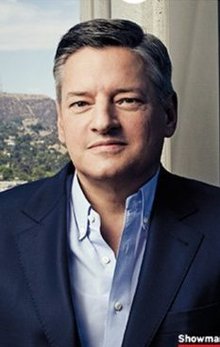
CNBC highlights the pair’s complementary skills as a key reason behind its co-CEO theory. It also points to a call between Iger and Netflix co-CEO Ted Sarandos last year, reporting that the Disney chief asked about the streaming giant’s use of the shared leadership model.
Netflix: a case study in co-success
Netflix has been widely lauded for its co-CEO approach, initiated mid-2020 when Sarandos – former Chief Content Officer – was promoted to the top job alongside then-CEO Reed Hastings.
In January 2023, Hastings stepped down and Greg Peters was promoted to join Sarandos.
The pair have subsequently scaled the business past 300 million members, overseen record subscriber momentum and a growth in advertising, revenue and operating margins.
Much of this success relies on the clear division of responsibilities and areas of focus the pair have set out – Sarandos is committed to brand and content, while Peters oversees product, ads, pricing and partnerships.
Discussing the benefits of dual leadership with Fast Company, Sarandos noted that “having someone to talk to who is not an employee or a board member – who is your peer – is so helpful… it helps combat that lonely-at-the-top thing.”
Whether the model works at Disney or not is somewhat hypothetical.
Discussing the idea, CNBC pointed to the fact that Walden and D’Amaro have little experience working directly together and differences in the company’s culture to that of a Netflix.
“When you create two sources of authority in an organization, that’s never good,” says Charles Elson, founding director of the Weinberg Center for Corporate Governance at the University of Delaware, according to CNBC. “Two in charge means no one is in charge.”
He added: “Inevitably, one CEO dominates and the other one goes away. That’s the nature of humanity.”
Company portals



Executives
Safra Catz
Former Oracle CEO
Ted Sarandos
Co-CEO