World Economic Forum: The Key Leadership Lessons From Davos
The World Economic Forum in Davos concluded on 23 January, marking the end of a series of leadership lessons based around the expansion of AI and technology and navigating complex tariffs.
With knowledge from hundreds of business and political leaders, this year’s WEF focused around “a spirit of dialogue”, recognising the complexities of global economic growth.
Commenting at the end of the week’s discussions, WEF CEO Børge Brende said on LinkedIn: “The forum is the world’s leading platform for multi-stakeholder dialogue on the most complex - and often most contested - issues of the day.
“We convene diverse voices from across governments, business and civil society, which means we don’t always see agreement.
“Sometimes, we see strong disagreement. This is okay. Because the purpose of the week - and the Forum’s work over the year - is to create a trusted space for dialogue.”
At the start of the event, Larry Fink, Co-Chair of WEF and BlackRock CEO opened the forum by expressing that it “can’t remain an echo chamber”, emphasising that the aim isn’t for panels “where everyone agrees 95% of the time” because “the world doesn’t”.
He said: “most of the people affected by what we talk about here will never come to this conference.
“That’s the central tension to this forum: Davos is an elite gathering trying to shape a world that belongs to everyone.
“We’re here for something bigger than ourselves and the organisations we represent.”
AI has a huge factor in the global economy
The top of the conversational agenda throughout the week was undeniably clear: AI.
Although most CEOs couldn’t agree on the details, leaders from a range of industries could agree on its power to shape the workplace and the global economy.
Olivier Blum, Schneider Electric’s CEO, wrote on a WEF blog post on 19 January saying the challenge for leaders is solving the paradox of energy demand growth versus energy system constraints.
“AI is redefining the global energy infrastructure,” he says. “AI is the digital engine of growth, but it is also a massive consumer of one of the world’s most in-demand resources - energy.
“And here’s the twist: AI is also the very technology we need to optimise the energy, infrastructure and systems it is powering.”
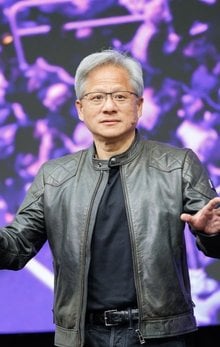
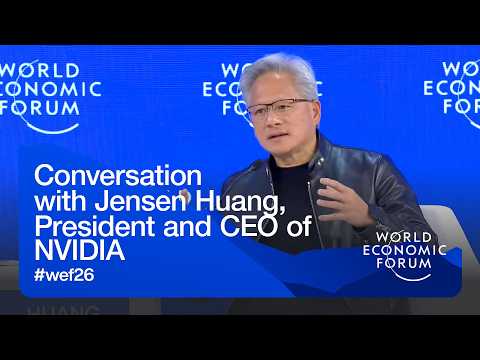
In conversation with Larry, NVIDIA CEO Jensen Huang expressed the importance of AI being seen as essential infrastructure.
“AI is infrastructure and there’s not one country in the world I can’t imagine that you need to have AI as part of your infrastructure,” he said, “because every country has its electricity, you have your roads - you should have AI as part of your infrastructure.”
He added that nations can easily import AI, saying it “is not so incredibly hard to train these days” and that “with local expertise, you should be able to create models”.
Understanding AI is the secret to its potential
Jensen also revealed the secret to his AI success: understanding where elements of the software stand in the “layer cake”.
The first layer is energy, then chips, which he described as “the layer that I live in”, then cloud infrastructure.
He then described the fourth layer, which is centred around AI models: “This is where people think AI is, but don’t forget in order for those models to happen, you have to have all of the layers underneath it.”
The final layer is the application later, the stage where AI finally shows up as useful tools and services that people and companies actually use.
Accenture CEO Julie Sweet echoes the need for understanding AI, saying implementation should be both trusted and successful.
“When Accenture first started on our journey, the first thing we did was take our top 50 leaders,” Julie said. “They got the most training in the first few months because if you don’t have the leaders understanding it, they can’t explain it to our people. They can’t drive the transformation.”
Staying one step ahead
Asides from having a strong grip on AI adoption and implementation, the forum also highlighted the need for companies to stay resilient amongst changing tariffs and regulations.
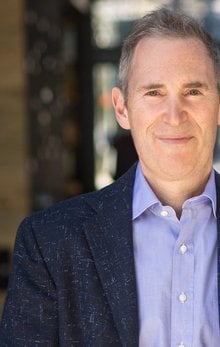
Amazon’s CEO Andy Jassy discussed the effects of President Donald Trump’s proposed tariffs. He said: “We did a lot of pre-buying in the early part of 2025 to enable us to try and keep prices as low as possible for customers.” But he added that some supplies ran out in autumn.
He said that consumers have dealt with the changes at Amazon so far but added: “We’ll have to wait and see what happens in 2026.”






Executives
Andy Jassy
President and CEO
Børge Brende
President and CEO
Jensen Huang
Founder and CEO
Julie Sweet
Chair
Larry Fink
Chairman and Chief Executive Officer

Olivier Blum
Chief Executive Officer