This Week's Top Five Leadership Stories
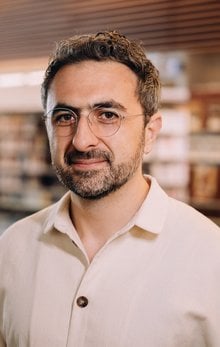
How Microsoft AI’s CEO Sees the Future of White Collar Work
Mustafa Suleyman, CEO of Microsoft AI, has predicted that white-collar work will be automated within a year and a half.
According to Mustafa, these changes can already be seen in fields such as coding, where relationships with technology are changing significantly due to advancements in AI.
In an interview with the Financial Times, he said that he thinks “we're going to have a human-level performance on most, if not all, professional tasks.
“So white-collar work, where you're sitting down at a computer, either being a lawyer or an accountant or a project manager or a marketing person – most of those tasks will be fully automated by an AI within the next 12 to 18 months.”
Mustafa joined Microsoft in 2024 to lead the company’s newly developed AI research and development hub.
In that time, he has turned the focus of Microsoft’s AI strategy towards Human Superintelligence (HSI), which looks to build AI that is a highly capable companion designed to serve human interests.
Mustafa has shared on a company blog that developing HSI is “accelerating our path towards tackling our most pressing global challenges”.
He said: “At Microsoft AI, we’re working towards Human Superintelligence: incredibly advanced AI capabilities that always work for, in service of, people and humanity more generally.”
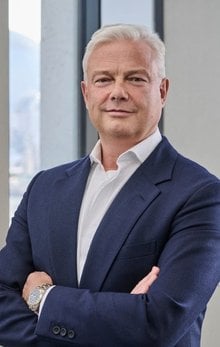
Why is Nuveen Buying Investment Giant Schroders?
For around 200 years Schroders has remained one of the few major asset management firms in the City of London to keep its independent, family-owned status.
That status ended on 12 February, with the British firm agreeing to a £9.9bn (US$13.5bn) takeover by US asset manager Nuveen – one of Europe’s largest ever fund manager deals that will create a combined group with US$2.5tn of assets under management.
Under the deal, Schroders will keep London as its largest office building, housing over 3,000 employees, which will serve as the combined group’s non-US headquarters.
The firm will also keep its branding, stating in an announcement that “Nuveen recognises Schroders’ position as a pre-eminent financial institution with a deep-rooted history and strong brand recognition.”
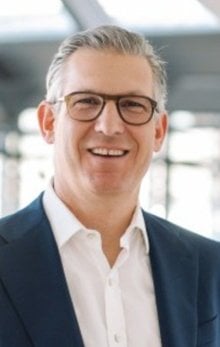
How Is Nestlé’s CEO Strengthening Strategy With Core Units?
Following his appointment, CEO Philipp Navratil plans to reorganise Nestlé into four core units: pet care, coffee, nutrition and food and snacking. This reorganisation aims to reduce costs and centralise functions such as marketing.
The company is also prioritising real internal growth-led expansion and is upgrading its marketing and innovation capabilities. These actions resulted in an organic growth rate of 3.5% for 2025, with revenue projected to rise between 3% and 4% in 2026.
Nestlé remains focused on winning categories and leveraging commercial synergies to drive sustained improvement and long-term value for shareholders.
encouraging performance in difficult environment
Management expressed confidence in the company's results during 2025, despite a challenging macroeconomic environment and weakening consumer sentiment.
Real internal growth (RIG) was positive across all zones and global businesses. “I am encouraged by our performance during 2025, which reflects the targeted actions we have taken in a difficult external environment,” said Philipp.
He noted that targeted growth investments helped drive RIG acceleration from 0.2% in the first half of the year to 1.4% in the second half. Improving organic growth and market share trends suggest that the current strategic actions are delivering results.
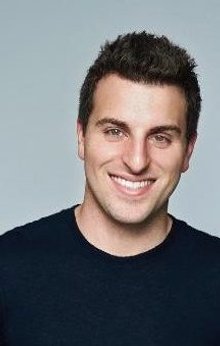
Why is Airbnb CEO Brian Chesky All-In On AI?
AI is forcing companies to pick a side. For Airbnb's CEO Brian Chesky, there is no hesitation.
"From a business standpoint, I think AI is the best thing that ever happened to Airbnb," Brian said in an interview with CNBC on 13 February.
He framed AI not as incremental efficiency, but as a structural shift that will separate adaptable companies from stagnantones.
"The founder-led companies and the companies that are prepared to change and transform are the companies that are going to benefit from AI," he said, "because AI means everyone changes. And if you don't change, you're going to be disrupted."
Brian's warning to other founders was blunt: "If you don't disrupt yourself, someone else will. And we're not going to allow people to disrupt ourselves.
"We're going to disrupt ourselves first."
For this CEO, AI is not something to cautiously experiment with. It is something to lean into - early and aggressively.
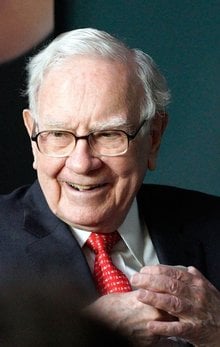
Berkshire Hathaway: Warren Buffet's Final Portfolio Moves
Berkshire Hathaway closed out 2025 with decisive portfolio changes in what marked the final quarter under outgoing and long-time CEO Warren Buffet, before he handed the reins to Greg Abel on 1 January.
According to regulatory filings released on 17 February, the Omaha-based company trimmed its stake in Apple Inc. by 4.3% to US$61.96bn. Even after the reduction, Apple remains Berkshire's largest equity holding at the end of the fourth quarter, according to InsiderScore.
The company has been trimming the position in stages since 2024, after previously slashing its stake by two-thirds that year.
The filing also disclosed a new US$351.7m stake in The New York Times Company, amounting to US$5.1m shares at year-end.
Separately, Berkshire slashed its stake in Amazon.com Inc. by more than 75% during the quarter and now owns roughly 2.3 million shares in the ecommerce giant.
Company portals





Executives
Brian Chesky
Co-founder & CEO
Mustafa Suleyman
CEO of Microsoft AI
Philipp Navratil
Chief Executive Officer
Richard Oldfield
Group Chief Executive
Warren Buffet
Former CEO