
Ford, BMW, Toyota: Leaders Set out Q1 Financial Performance

Global automotive manufacturers face a combination of pressures in early 2026.
Rising energy costs and geopolitical tensions could affect raw material availability, according to reports from the sector, while competition from Chinese electric vehicle producers has intensified for Western brands.
Within this context, first quarter results from major manufacturers show varied performance across different markets and strategies, as some companies posted revenue growth while others recorded reduced profits.
Ford raises full year guidance
According to Ford, the company recorded first quarter revenue of US$43.3bn in 2026. Net income reached US$2.5bn with adjusted earnings before interest and taxes of US$3.5bn.
The results represent an improvement on the same period in 2025, when Ford reported first quarter revenue of US$40.7bn. Net income in that period was US$471m with adjusted EBIT of US$1bn.
Jim Farley, President and CEO of Ford, says: "Our strong first-quarter results and raised full-year guidance reflect the momentum of the Ford+ plan. We built the foundation for a more modern, resilient Ford, improving cost and quality and building our world-class team.

“We are well prepared to deliver for our customers and shareholders as we enter one of the most intensive product, software and physical services rollouts in our history."
Total sales fell 8.8% year on year to 457,315 vehicles. Ford is revising its electric vehicle strategy following a writedown of US$19.5bn related to its EV programme earlier in 2026.
The company is working on its Universal Electric Vehicle programme to manufacture EVs at lower cost for global competition with other brands, including Chinese manufacturers.
Stellantis reports volume growth
Net revenues at Stellantis increased to €38.1bn (US$44.8bn) in the first quarter of 2026, up 6% from €35.8bn (US$42bn) in the first quarter of 2025. According to the company, volume growth across all regions supported the improvement, with North America the primary contributor.
Net profit reached €0.4bn (US$471m). Adjusted operating income was €1.0bn (US$1.8bn) with an AOI margin of 2.5% and most regions positive.
Shipments rose from 1,217,000 units in the first quarter of 2025 to 1,361,000 units in the same period of 2026. Antonio Filosa, CEO of Stellantis, says: "As we initiate quarterly reporting, the first three months of 2026 reflect the early results of our actions to return Stellantis to sustainable, profitable growth.
“The products we launched in 2025 have been well received and we're confident that the 10 new vehicles planned for 2026 will build on this momentum."
The company announced an enhanced AI strategy in partnership with Microsoft across customer care and operations.
BMW margin drops below expectations
BMW Group posted profit before tax of €2.35bn (US$2.96bn) in the first quarter of 2026, down 24.6% on the previous year. The EBIT margin was 5%.
Deliveries fell 4.2% from 44,609 units to 42,735 units year on year. According to the manufacturer, economic growth in the US during the first quarter was stronger than in the fourth quarter of 2025 but remained slightly below expectations.
BMW stated in its Quarterly Statement that: "In Europe, economic output increased only marginally in the first quarter; at the same time, there are first signs that the conflict in the Middle East is weighing on economic activity."
Sales of all electric automobiles in Europe continued to rise, with 59,936 units delivered, up 2% from 58,761 units in 2025. The company is working on the rollout of its Neue Klasse, a new generation of vehicles designed for a fully electric era, including the i3.
Toyota forecasts operating income decline
Toyota recorded a ¥1.4tn (US$8.9bn) impact from tariffs in the financial year 2025/26. The company also projected a ¥670bn (US$4.3bn) Middle East impact from the Iran war for the current fiscal year.
The world's largest car maker posted sales of 10,477,000 units across its Toyota and Lexus brands. Takanori Azuma, Accounting Group Chief Officer at Toyota, told shareholders that vehicle sales increased thanks to strong demand from customers, mainly in Japan and the US.
Taking into account the Middle East impacts and other factors, Toyota is forecasting operating income for the fiscal year ending March 2027 of ¥3tn (US$19.4bn), representing a year on year decrease of ¥800bn (US$5.11bn).
Operating income for the financial year 2025/26 was ¥3.8tn (US$24.2bn), down ¥1tn (US$6.4bn) year on year.
Battery electric vehicle sales increased 168.4% to 145,000 units in the financial year ending in 2026. The group forecasts 243,000 battery electric vehicle sales this year.
Volkswagen makes progress in China
Volkswagen recorded €75.7bn (US$81.76bn) in sales revenue in the first quarter of 2026, 2% below the first quarter of 2025 when the company reported €77.6bn (US$91.4bn).
The operating result was €2.5bn (US$2.95bn) in the first quarter of 2026, which is 14.3% below the first quarter of 2025.
Oliver Blume, CEO of Volkswagen, said in a statement accompanying the results: "The world is undergoing fundamental change and we are aligning our strategy consistently. Wars, geopolitical tensions, trade barriers, stricter regulations and intense competition are creating headwinds. In this challenging environment, we have managed to make tangible progress."
Arno Antlitz, CFO and COO of Volkswagen Group, said in a statement: "We made further progress in the first quarter of 2026: order intake in Europe improved, our 'In China, for China' strategy is progressing."
The German carmaker is diversifying into the Chinese market, having partnered with XPENG as part of its In China, for China strategy. The jointly developed ID.UNYX 08 EV rolled off the production line this year.
BYD profit falls on competition
According to Reuters, Chinese brand BYD's quarterly profit fell at its fastest pace since 2020. The company faced intense competition from other Chinese brands, with first quarter net profit dropping 55.4% from a year earlier to 4.1bn yuan (US$599.46m).
BYD is developing new EV battery technology in the competition against other brands. The company announced its Blade Battery 2.0 in March 2026, which offers more than 1,000 km in range.
Company portals



Executives
Antonio Filosa
Chief Executive Officer
Arno Antlitz
CFO
Jim Farley
Chief Executive Officer
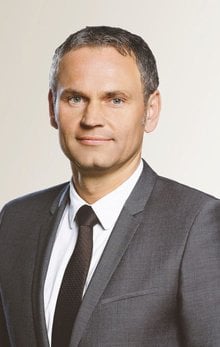
Oliver Blume
CEO

Takanori Azuma
Group Chief Officer