Top 10: CEOs in Automotive and EVs
The automotive industry is undergoing unprecedented transformation, driven by electrification, digitalisation and evolving mobility trends.
Leadership plays a critical role in guiding companies through these challenges while balancing innovation, profitability and global competitiveness.
Business Chief highlights 10 of the world's most influential automotive CEOs, representing legacy giants as well as rapid-growth EV leaders.
These leaders emphasise the importance in strategic vision, operational expertise and impact on product development, sustainability initiatives and long-term growth, providing insight into the leadership shaping the future of mobility.
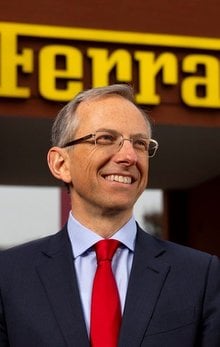
10. Benedetto Vigna
Company: Ferrari
Location: Maranello, Italy
Revenue: €7.15bn (US$8.46bn)
Appointed CEO of Ferrari in September 2021, Benedetto brought decades of experience leading complex technology groups before moving into the luxury automotive sector.
At Ferrari, he directs the company’s strategic evolution, balancing heritage performance with next-generation innovation, including early electrification efforts.
His background in advanced systems and leadership of large technical organisations informs Ferrari’s emphasis on disciplined execution and technological integration across vehicles and operations.
Benedetto’s tenure reflects a focus on long-term competitiveness and organisational cohesion.
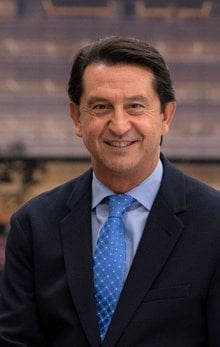
9. José Muñoz
Company: Hyundai Motor Company
Location: Seoul, South Korea
Revenue: KRW 186.3tn (US$129.01bn)
As President and CEO of Hyundai Motor Group, José leads the company’s global business and the Hyundai and Genesis brands, driving strategy across electrification, diversified powertrains and hydrogen technologies under the Progress for Humanity vision.
He joined Hyundai in 2019 as Global Chief Operating Officer and CEO for North America, where he oversaw record sales and profitability growth.
José’s global operational leadership, focus on expanding market share and strategic investments in production and technology underpin Hyundai’s rise as a global automaker.
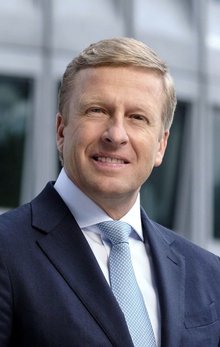
8. Oliver Zipse
Company: BMW
Location: Munich, Germany
Revenue: €126.95bn (US$150.22bn)
Leading BMW Group as Chairman of the Board of Management (CEO), Oliver draws on more than three decades with the company, where he has held roles spanning planning, production and strategy.
His tenure focuses on steering BMW through industry shifts toward electrification, digitalisation and sustainable mobility, while preserving the brand's premium heritage.
With deep operational insight and experience across global markets, Oliver emphasises disciplined execution of long-term technology and product programmes that support BMW's competitiveness in a changing automotive landscape.
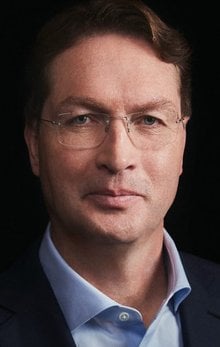
7. Ola Källenius
Company: Mercedes-Benz Group AG
Location: Stuttgart, Germany
Revenue: €132.2bn (US$156.4bn)
Ola has led Mercedes-Benz Group as CEO since 2019, guiding the company through a period of significant technological and market change.
With decades of experience within the firm, he focuses on advancing electrification, digital innovation and sustainable growth while preserving the brand's premium identity.
Ola prioritises operational efficiency and long-term strategic planning, positioning Mercedes-Benz to compete efficiency in a rapidly evolving automotive landscape.
His leadership is recognised through a mandate extending through 2029, underscoring confidence in his strategic direction.
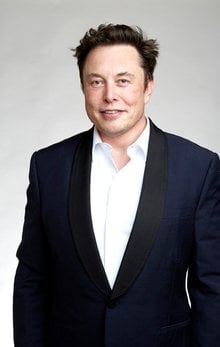
6. Elon Musk
Company: Tesla
Location: Texas, US
Revenue: US$94.8bn
Elon is a Co-Founder and the CEO of Tesla, responsible for overseeing the design, engineering and global production of the company's EVs, battery systems and solar energy products.
He leads efforts across Tesla's full product lineup - from early models to mass-market EVs and energy storage solutions - in pursuit of the company's mission to create a world of abundant, sustainable energy.
Elon directs the company's approach to innovation and large-scale manufacturing.
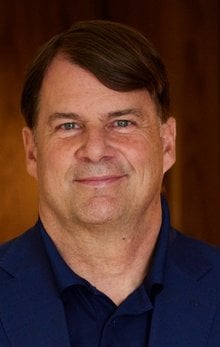
5. Jim Farley
Company: Ford Motor Company
Location: Michigan, US
Revenue: US$187.3bn
Leading Ford as President and CEO, Jim has focused on reshaping the business for a competitive future while maintaining strength in core segments.
With a long-term career spanning global operations, marketing and product development, he emphasises customer-centric innovation and disciplined execution.
Jim has accelerated Ford's transition to electrification, streamlined operations and reinforced the company's commitment to sustainable growth.
His strategic direction aims to balance legacy market strength with new-era mobility solutions.
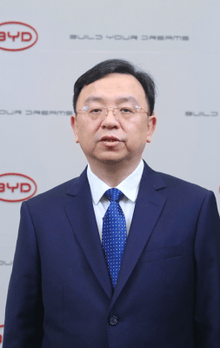
4. Wang Chuanfu
Company: BYD
Location: Shenzhen, China
Revenue: CNY 777.1bn (US$112.4bn)
As Founder, Chairman and CEO of BYD, Wang has led the company’s evolution from a rechargeable battery manufacturer into a diversified global leader in new-energy vehicles and clean technologies.
With an engineering background, he has consistently prioritised in-house innovation and vertical integration, enabling BYD to expand across electric mobility, energy storage and related technologies.
His long-term leadership has positioned BYD as a major force in sustainable transportation and industrial electrification worldwide.
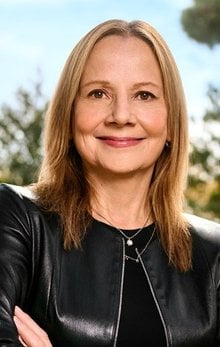
3. Mary Barra
Company: General Motors
Location: Michigan, US
Revenue: US$185.02bn
Serving as Chair and CEO of General Motors since 2014, she has guided the company’s global strategy and operations through a period of significant industry transformation.
Her leadership centres on GM’s vision of zero crashes, zero emissions and zero congestion, while accelerating progress in electrification, autonomous technology and advanced vehicle platforms.
With decades of experience at GM across engineering and executive roles, she combines operational depth with a forward-looking approach focused on innovation, customer experience and long-term sustainable growth.
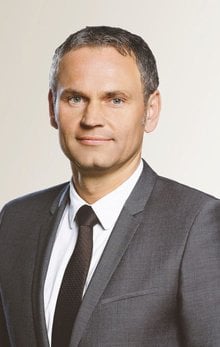
2. Oliver Blume
Company: Volkswagen Group
Location: Wolfsburg, Germany
Revenue: €324.7bn (US$384.2bn)
Oliver has emerged as one of the most influential leaders in global automotive by guiding Volkswagen Group through one of the industry’s most complex transitions.
Since taking over as CEO in 2022, he has overseen the strategic direction of the world’s highest-revenue automaker, managing a portfolio of major global brands while confronting supply chain disruption, rising competition from Chinese EV manufacturers and accelerating electrification demands.
His background in engineering and production gives him operational credibility, and his leadership style had emphasised financial discipline, organisational simplification and sharper execution across the Group.
Under his tenure, Volkswagen has continued large-scale investment in electric platforms and software capabilities while focusing on profitability and global competitiveness.
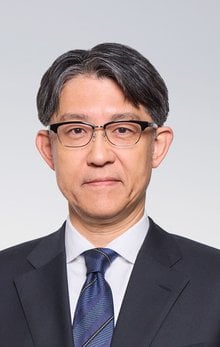
1. Koji Sato
Company: Toyota Motor Corporation
Location: Toyota City, Japan
Revenue: JPY 48.04tn (US$312.84bn)
Koji’s tenure as CEO of Toyota Motor Corporation has been marked by deep institutional knowledge, technical acumen and the stewardship of the world’s largest automaker by revenue.
After joining Toyota in 1992 as a mechanical engineer, Koji rose through product development roles, including leading suspension design teams and major vehicle programmes, and later headed Lexus International and Gazoo Racing, strengthening both luxury positioning and brand performance.
As CEO, he bridged Toyota’s legacy in reliability and hybrid technology with a broader mobility vision, reinforcing its hybrid leadership while preparing for a multi-path approach to electrification and carbon neutrality.
Although he is transitioning from the role in 2026, his leadership helped sustain Toyota’s global scale, revenue dominance and disciplined transformation strategy - blending product excellence with strategic adaptation in one of the most competitive automotive eras in history.
Company portals




Executives
Benedetto Vigna
CEO
Elon Musk
Tesla CEO
Jim Farley
Chief Executive Officer
José Muñoz
CEO
Koji Sato
CEO
Mary Barra
CEO
Ola Källenius
CEO
Oliver Blume
CEO
Oliver Zipse
CEO
Wang Chuanfu
CEO