
This Week's Top Five Leadership Stories
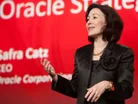
How Safra Catz is Powering Oracle’s Hypergrowth Journey
Tech firms benefiting from the AI boom is hardly news. But there’s benefitting, and then there’s the kind of growth that cloud firm Oracle has seen recently.
Last week the company announced its fiscal year 2026 Q1 results, setting out impressive performance that signalled enormous demand for its cloud services and saw company stock climb 36% – described by the likes of Nasdaq as the best single-day performance since 1992.
Oracle said that remaining performance obligations were up 359% and valued at US$455bn, indicating a huge backlog of future revenue from signed contracts, particularly for its AI-driven cloud services.
This figure, as well as a quarterly revenue of US$14.9bn – up 12% in USD – saw the company gain US$244bn in market cap, reaching a total market value of around US$922m.
Even CEO Safra Catz acknowledged the extent of the numbers, saying: “It was an astonishing quarter – and demand for Oracle Cloud Infrastructure continues to build.
“We signed four multi-billion-dollar contracts with three different customers in Q1,” said Safra, noting that “Oracle is off to a brilliant start to FY26.”
Is the Pope Right on Elon Musk? Do Executives Earn too Much?
Executive pay is a contentious issue. A fact that the world was reminded of last week when Tesla set an unprecedented US1$tn pay package for CEO Elon Musk – a figure close to the company’s market valuation.
Much like Musk himself, the offer split opinion.
Critics say it accentuates income inequality while supporters point to the high risk and high expectations involved in the ambitious targets Tesla presented to Musk.
These included boosting the company’s valuation nearly eightfold, pioneering humanoid robots and more, all packaged under its Master Plan IV strategy.
Ever-increasing executive pay packages like the one Tesla has dropped on the table for Musk have even caught the attention of Pope Leo, who has criticised the growing pay gap between corporate bosses and working people.
In his first interview since becoming pope in May 2025, published on Catholic news website Crux, Leo cited rising economic inequality as a catalyst for increasing global polarisation.
The pope singled out Musk, citing him as an example of the kind of wealth that is undermining “the value of human life”.
“Yesterday, there was the news that Elon Musk is going to be the first trillionaire in the world,” he said. “What does that mean and what’s that about? If that is the only thing that has value anymore, then we’re in big trouble.”
What are Microsoft CEO Satya Nadella’s Top AI Tips?
Let’s cut to the chase. There are countless guides, videos and walkthroughs on how to best use AI to turbocharge the boardroom and the business – probably as many as there are arguments for and against the proliferation of the tech in companies.
But time is precious for CEOs. Certainly too precious to get bogged down in the minutiae of AI prompts, chatbots and which platform is the best for organisation, productivity, communication, productivity… you get the idea.
This level of complexity is partly behind the AI anxiety that’s dominating the workforce, from young Gen Z workers and entry-level roles through to CEOs.
More than three fourths of US CEOs worry about losing their jobs, according to a Harris Poll survey for Dataiku. Meanwhile, a February 2025 Cisco Study found that 80% of CEOs recognise AI’s benefits, but 70% of them fear gaps in their own knowledge will hinder decisions at board level.
The advice is the same for bosses as it is for everyone else: embrace AI with both hands.
Can New CEO Francesca Bellettini Revive Gucci?
Things move quickly at the top. Just ask Stefano Cantino who, after only nine months heading up the Italian fashion brand, is exiting the company.
He is being replaced by Francesca Bellettini, former deputy-CEO in charge of brand development at parent company Kering and one-time CEO of Yves Saint Laurent.
The appointment is the first major decision by new Kering CEO Luca de Meo, who joined the French multinational luxury goods company in June 2025 at a time when the organisation faced financial turbulence, particularly due to declining sales at flagship brand, Gucci.
He said of the appointment: “At this pivotal moment, I intend to build a leaner and clearer organisation in which the best talent drive our Houses forward.
“Gucci, as the flagship of our Group, deserves the sharpest focus, and Francesca – one of the most seasoned and respected professionals in our industry – will bring the leadership and flawless execution needed to restore the brand to its rightful place.”
Jensen Huang is certain: the UK will become an AI superpower.
The CEO of Nvidia, one of the world’s largest companies powering the global AI revolution, told the BBC as much in an interview that saw him discuss the country’s technical strengths as well as its infrastructure limitations.
Huang’s words coincide with United States President Donald Trump’s state visit, during which meetings with Prime Minister Keir Starmer have opened the tap to massive investment from tech firms and closed the US$42bn Tech Prosperity Deal.
Google has confirmed a US$6.82bn investment into UK AI, while Microsoft has committed US$30bn to develop essential infrastructure – its largest investment outside the US, and a firm show of support for transforming the nation into a global hub for AI development.
When it comes to AI development, Prime Minister Keir Starmer and President Trump both pursue national AI leadership, as does China’s President Xi Jinping.